
Rebuild. Precision. Lives.
I rebuild precision technology companies from the inside out.
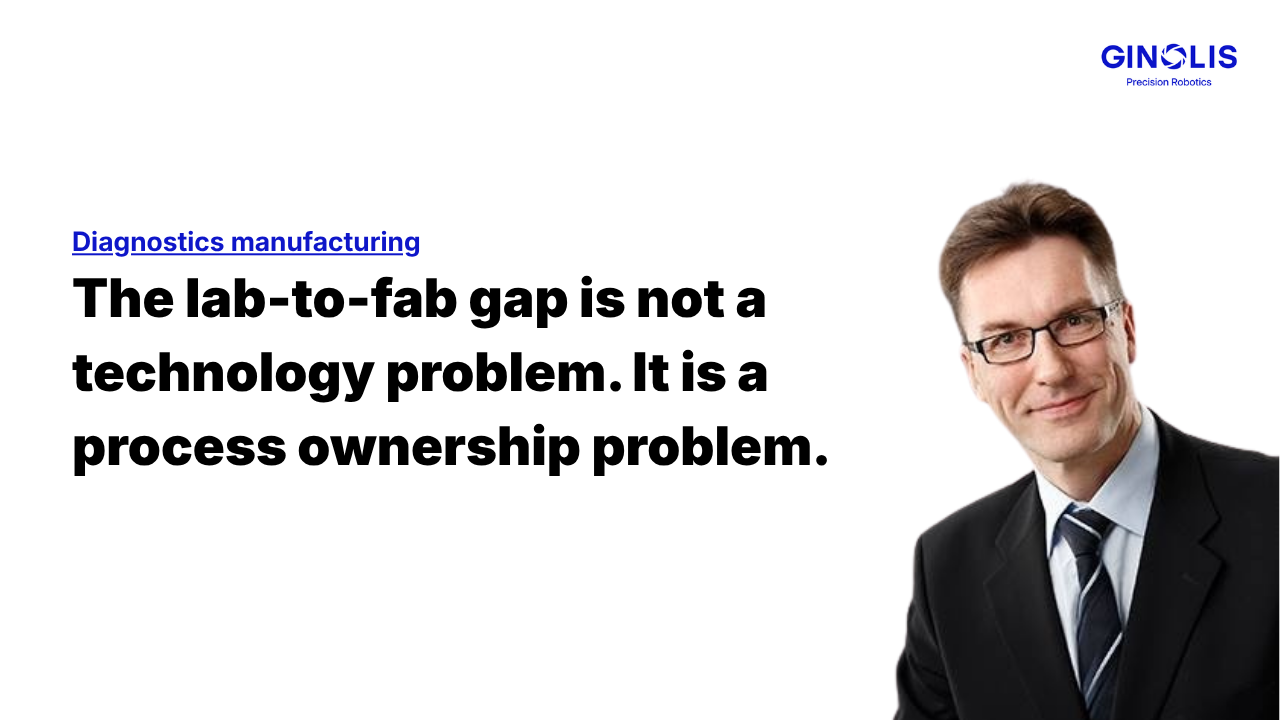
“Technology cannot scale to the factory floor if it doesn't save lives. A sepsis test that takes three days to reach a patient is not a solution."
-Kauko Väinämö
I have written the quotation, run the ERP, and flown to Germany on a Friday to service a customer's power plant.

Most CEOs in precision automation come from one of two places: pure engineering, or pure business. I come from both. That is rare enough to be the point.
My view is simple. Between the lab and the factory floor, there is a gap. It is where diagnostics companies lose 12 to 24 months of market time. It is where assays that work on the bench fail in production. It is where research breakthroughs stop being useful to patients.
I have spent 30 years closing that gap. The work matters because the output is not a product. It is a faster sepsis result. A point-of-care test in a clinic that never had one. A diagnosis that arrives in time.
Field notes
Working observations from inside precision automation. Lab to fab. Rebuilding companies. Why microfluidics matters now.















Notes from the factory floor
Occasional dispatches on lab-to-fab, microfluidics, and what it actually takes to rebuild a company. Operator to operator. No fluff.
The company I lead
Ginolis builds the manufacturing infrastructure for microfluidic diagnostics. Production lines for rapid tests. Lab dispensing platforms that travel from bench to factory floor without re-validation. IoT data systems for traceable production.
If you are running diagnostics manufacturing, that is where the equipment lives.
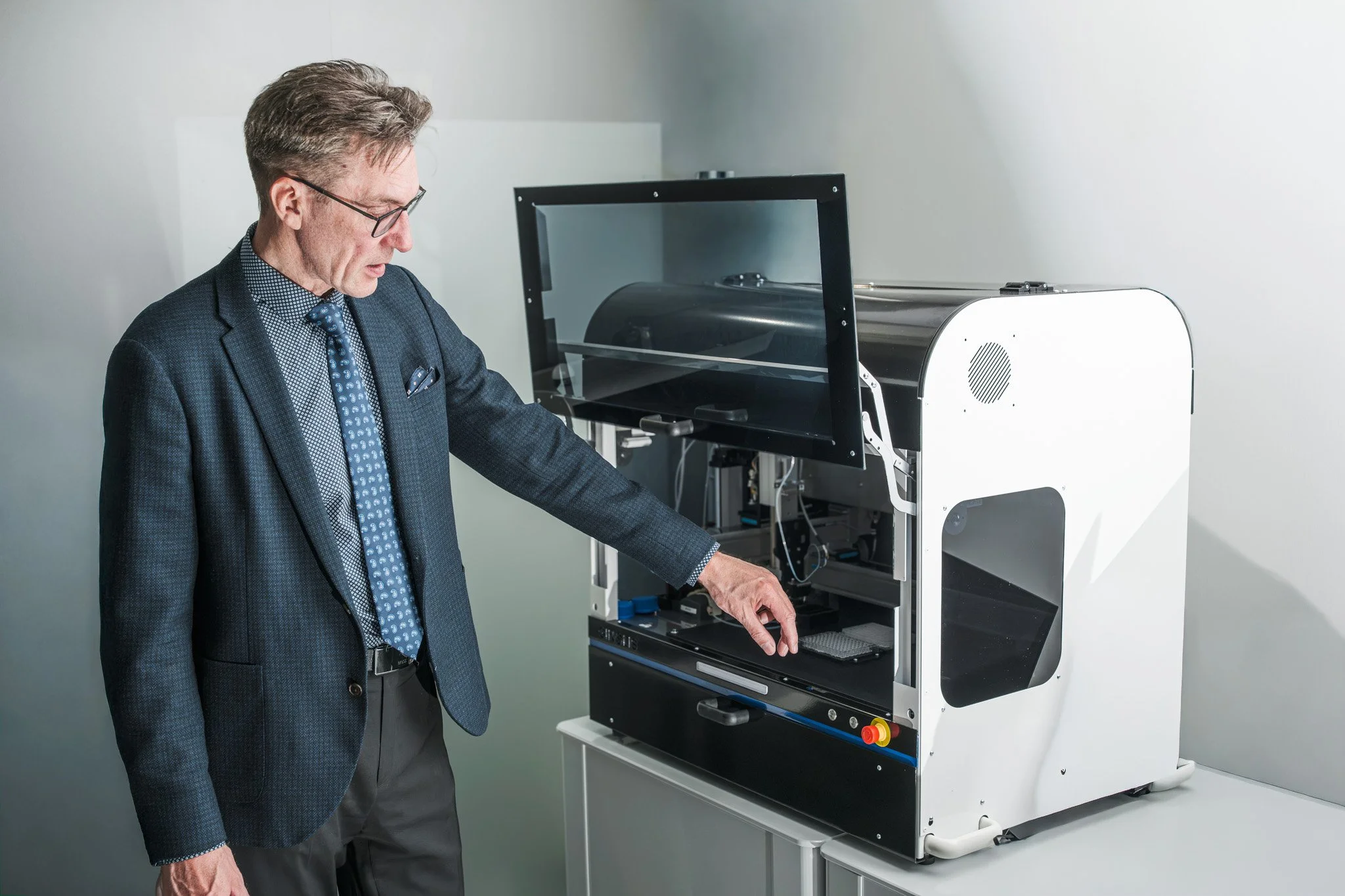
I sit down with the operators, scientists, and investors turning breakthrough research into production at scale. Where modern medicine actually gets made.

Kauko Väinämö on a diverted flight, a blocked fuel filter, and the question that kept him awake over the dark forests south of Oulu. Drawing on Charles Perrow's Normal Accidents, he explains why redundancy only works when two systems can fail for genuinely different reasons, and why most backup systems share a hidden cause no one ever mapped.